This project taught me how different media formats can tell the same story in completely unique ways. Working across visual, design, audio, and video categories showed me that each medium has its own strengths; images capture moments, design shows progression, audio creates atmosphere, and video ties everything together. I learned technical skills in GIMP, Canva, Audacity, and Clipchamp, but more importantly, I learned how to think about storytelling across multiple platforms.
The most surprising lesson was discovering that sound alone can be as powerful as visuals. Creating the sound effects story forced me to think about narrative without relying on images or words. It came down to just pure audio storytelling. I also learned the importance of planning and organization; having a clear narrative arc from the beginning made it much easier to choose which assignments fit my story.
What I Would Do Differently
If I took this class again, I would likely add more to my content now that I have a pretty good hang of how things work in the creative space. I wouldnt struggle as much with the mechanisms, and could really get more creative with my works.
Most Exciting Aspect
The most exciting part of this semester was actually this project; watching the USB drive become a real character was really fun! At first, it seemed strange to tell a story from an inanimate object’s perspective, but as I created each media piece, the USB’s “voice” became clearer. By the end, it really came together better than I thought it would.
I found the design/visual projects to be the most fun; it allowed me to really just spill out ideas, add and remove as I go, and just kind of relax while doing so.
Overall, this project pushed me to think creatively across multiple platforms while maintaining a cohesive narrative. It challenged me technically and I’m proud of the story I created.
I am small. Insignificant, really; just a few grams of plastic and metal, no bigger than a thumb. SanDisk, it says on my casing, though the red paint has faded over the years. But inside me, I carry everything.
It was a Tuesday in October 2017 when I was born, in a sense. Pulled fresh from a Walmart bag, my plastic wrapper torn away by eager hands. David’s hands. He had kind eyes, the sort that crinkled at the corners when he smiled, which was often. He sat at the kitchen table, laptop open, their family USB drive overflowing with too many files. “Time for a new one,” he’d said to no one in particular, though Maya was nearby, folding laundry with one of their daughters, Emma, on the floor building towers with blocks.
That first night, David moved photos after photos on my storage system. Click, drag, drop. Hundreds of files flooded into my circuits of all sorts; birthdays, first steps, vacation photos from the lake where the trees hung low over the water and the light turned everything golden. There was a video of Emma, three years old, laughing so hard she couldn’t stand up. Another of Maya’s birthday, candles flickering, David’s voice off-camera singing off-key. And then, tucked between a folder labeled “Taxes_2016” and “Emma_School,” there was a voice memo. Just forty-three seconds long.
“Hey family,” David’s voice, recorded on some random Tuesday evening. “Just wanted to say I love you all. Remember I’m always proud of you, no matter what.”
December 2017 was when everything changed. I wasn’t there technically. I was in the drawer by then, but I felt it in the way the house went silent. David didn’t come back. The laptop stayed closed for weeks. The laughter stopped.
Maya found me one evening, sobbing in a way that made no sound. She held me in her palm, this tiny keeper of a thousand happy moments, and I felt her hands shake. She couldn’t do it. Couldn’t plug me in, couldn’t see his face, couldn’t hear his voice. Not yet. Maybe not ever.
The drawer closed with a soft click.
Time moves differently when you’re forgotten. Days blurred into weeks, weeks into months. I could hear life continuing around me. Muffled voices, footsteps, the scrape of the drawer opening occasionally for other things. Never for me. I listened to Emma grow older, her voice deepening slightly. I heard Maya cry less, then not at all. I heard her laugh again, once, and it startled me.
Calendars changed. 2018. 2019. 2020 brought strange silence to the house. Everyone home all the time, voices tight with worry about something I couldn’t see. Then life resumed its rhythm, but different. New normal, they kept saying.
I was moved once, from the bedroom drawer to a box in the closet during a cleaning spree. Maya’s hand hesitated when she saw me, but she tucked me away with old birthday cards and Emma’s baby clothes. Things too precious to throw away, too painful to look at.
The house felt fuller somehow. Emma’s friends visited more. There was a new dog; I could hear it barking, nails clicking on hardwood. Life, insistent and relentless, growing around the hole David left behind. Music played; an instrumental. It was muffled by the wooden drawer that contained me.
I held my files close. The pixels of his smile. The waveforms of his laugh.
Eight years. I waited eight years.
Christmas 2023 arrived with the smell of pine and cinnamon, sounds of wrapping paper, Emma’s voice, seventeen now, impossibly grown. “Mom, where did you put the old ornaments? The ones from when I was little?”
“Check the closet. Top drawer, I think.”
Objects shifted. The one containing me tilted, and I felt myself slide toward the edge, wedged between something soft. The drawer opened. Light flooded in once again. Emma’s hands, so much bigger than I remembered, sifted through contents.
“What’s this?”
She held me up. Maya turned, and for a moment, her face did something complicated. Fear. Longing. Something that looked like pain but wasn’t quite.
“Is this… is this Dad’s?”
Maya’s voice was quiet. “I’d forgotten about that.”
A lie. You don’t forget. You just decided not to remember.
“Can we…” Emma didn’t finish the question.
Maya stood very still. Then, slowly, she nodded. “Yeah. Yeah, let’s see what’s on it.”
The laptop was different, newer, faster. The USB port felt foreign, but then I was connecting, my files spilling onto the screen in a cascade of thumbnails. Emma’s breath caught.
“Oh my god. Look how little I was.”
They started at the beginning. The lake photo, sunlight and trees and a family of three looking impossibly happy. Emma at two, covered in birthday cake. Maya and David dancing in the kitchen to music I couldn’t hear, her head on his shoulder.
They cried. Both of them. But they laughed too. Surprised, almost guilty laughter at the silly faces David made, at Emma’s toddler tantrums caught on camera, at Maya’s terrible Christmas sweater from 2015.
“I don’t remember him being this goofy,” Emma said softly.
“He was,” Maya said, and her voice held something new. Not grief. Not quite joy. Something in between. “He was so goofy.”
They found the voice memo by accident, click-dragging through folders looking for more videos. Emma’s cursor hovered over it. “What’s this?”
The play button clicked.
“Hey family. Just wanted to say I love you all. Remember I’m always proud of you, no matter what.”
Forty-three seconds.
The room went completely silent after it ended. Emma played it again. Then once more. On the third time, Maya started to cry, but it wasn’t the same crying as that December night eight years ago. This was something else. Something that sounded almost like relief.
“He sounds so… normal,” Emma whispered. “Like he was just in the next room.”
“I know.”
“I was so afraid I’d forget what he sounded like.”
Maya pulled her daughter close. “Me too.”
They didn’t watch everything that night. There were too many files, too many years to revisit in one sitting. But they made a plan. Maya said it out loud, making it real: “We should back these up. Put them somewhere safe. Maybe… maybe share some with Grandma. She’d want to see these.”
Emma nodded, already opening cloud storage, creating folders. As she worked, she kept playing the voice memo. Four times. Five. Like she was memorizing it. Maybe she was.
I knew then what I’d been doing all these years. Not just storing data. Not just keeping pixels and sound waves organized in my circuits. I’d been waiting. Holding space for grief to transform into something better. Keeping the door open for whenever they were ready to walk back through once more.
Before they put me back, carefully now, in a drawer they’d actually remember, Emma looked at me one more time. “Thanks for keeping him safe,” she said, and I knew she meant the files, but maybe she meant something bigger too.
The drawer closed. But this time, I wasn’t forgotten. This time, they knew exactly where I was.
Some memories hide in the dark, waiting for the light. I waited eight years. But in the end, I did what I was made to do.
I remembered. And when they were ready, I helped them remember too.
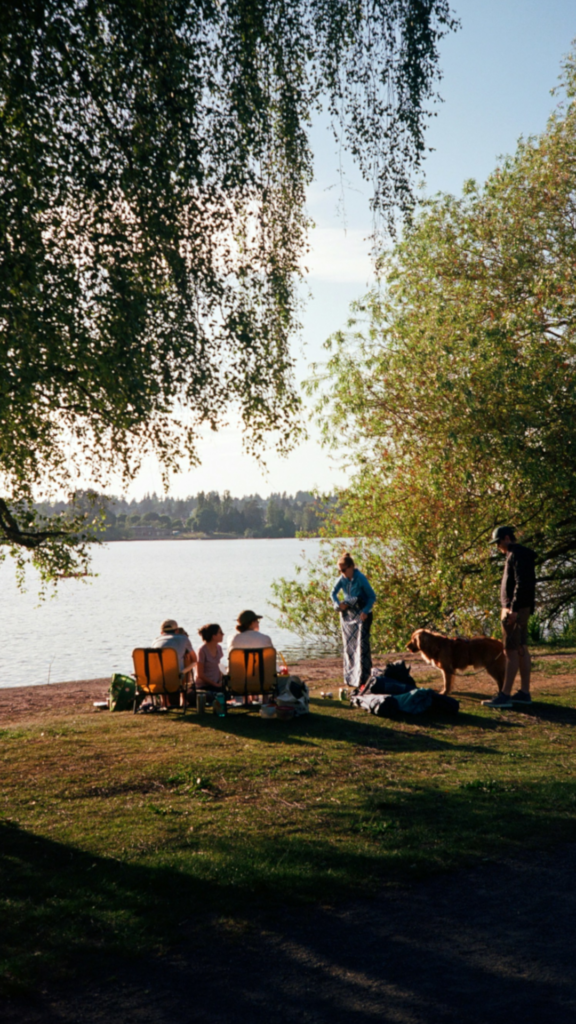
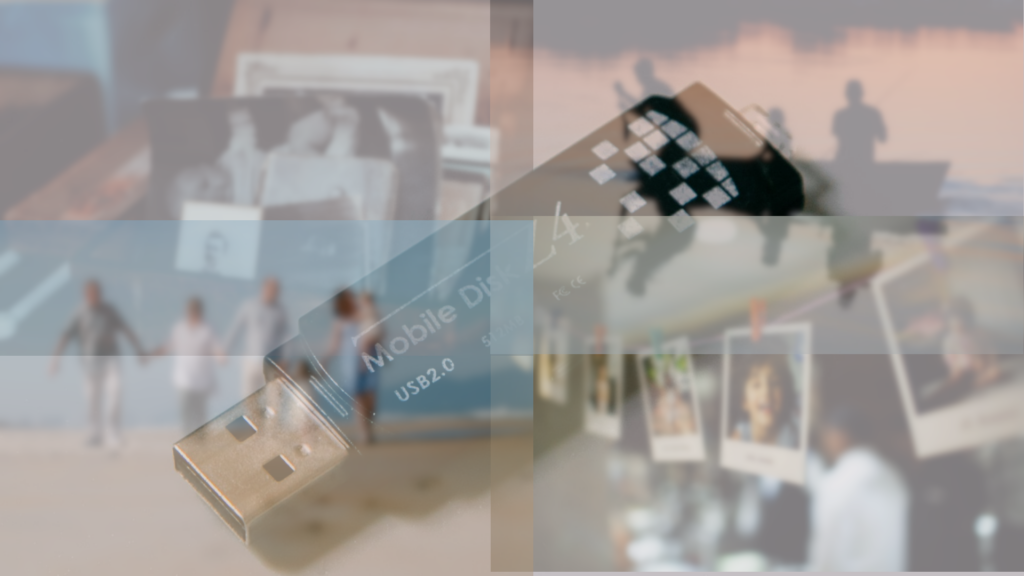
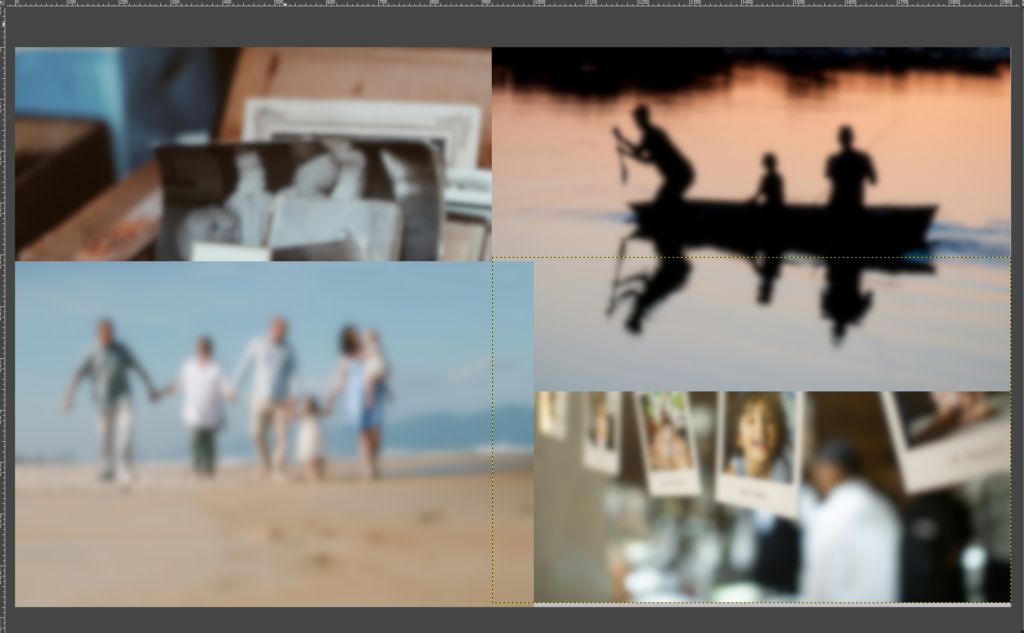
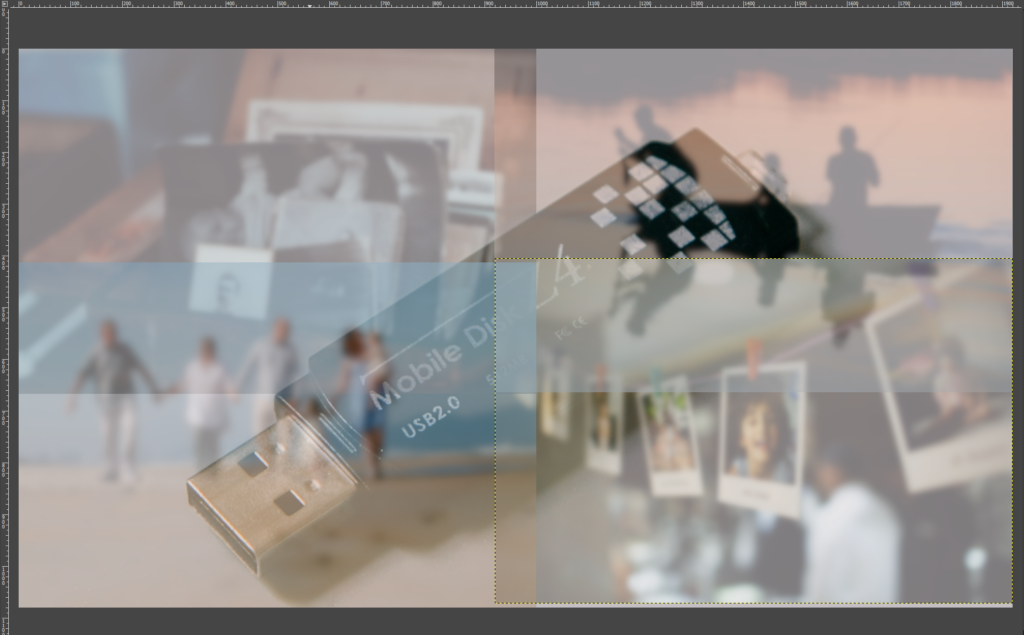
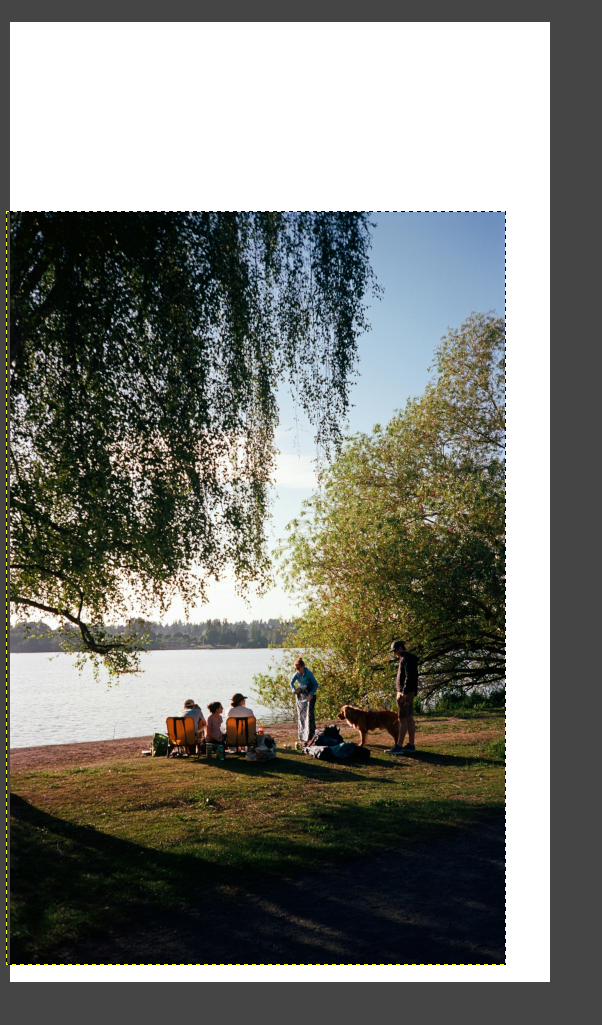
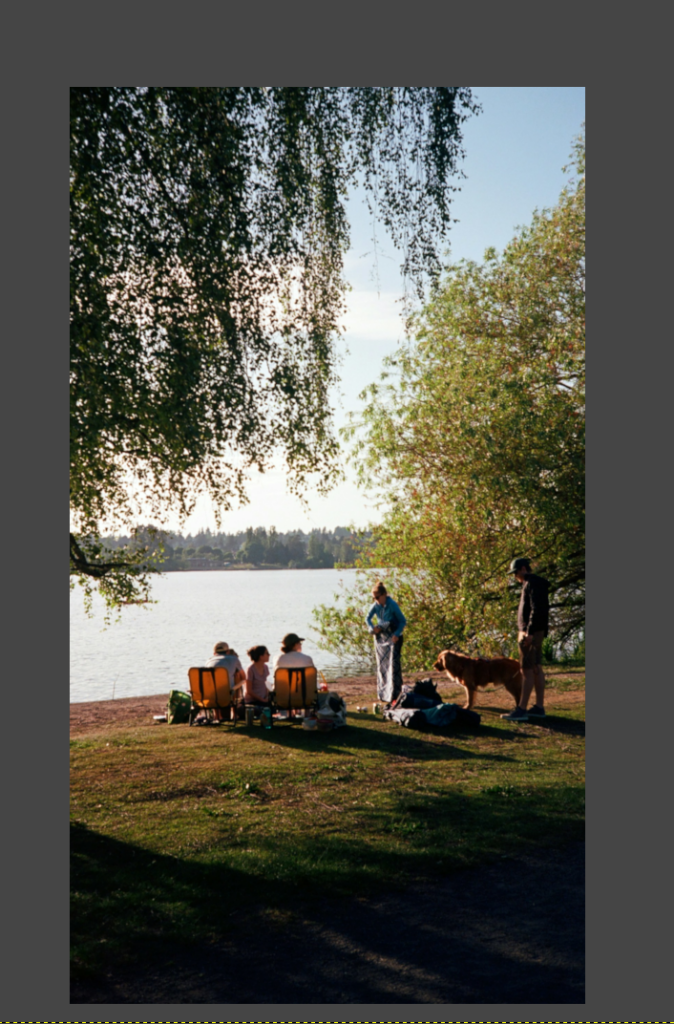
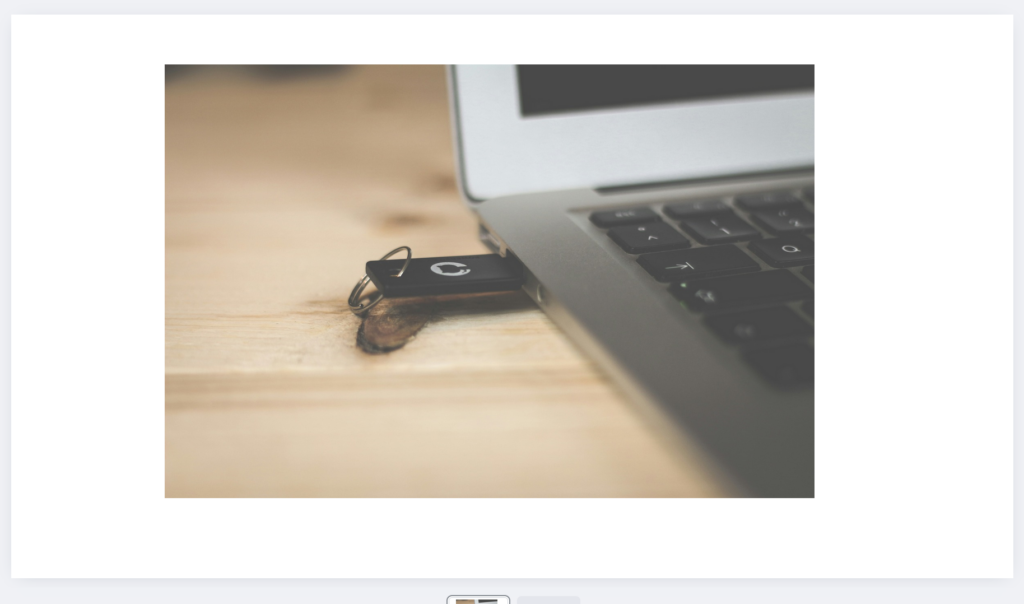
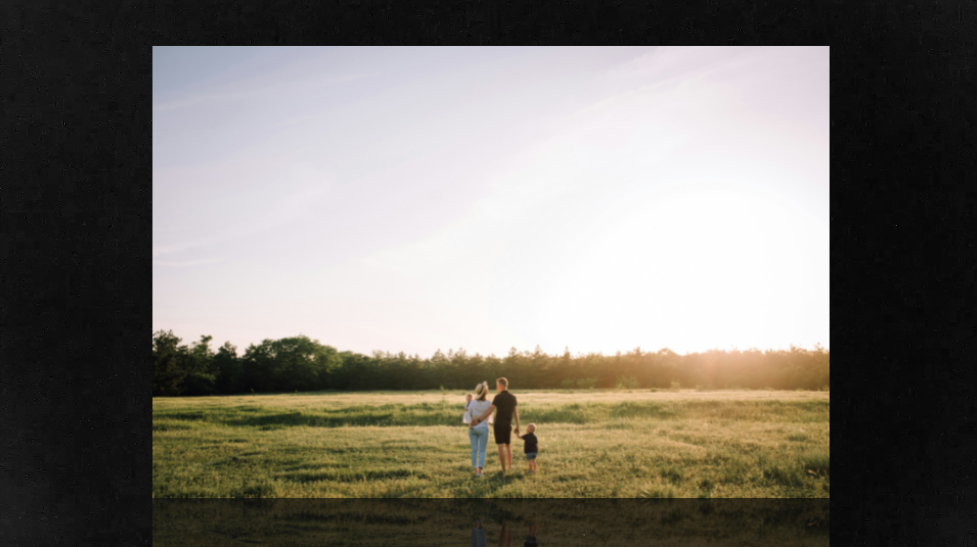
For my visual work, I created two pieces exploring memory through photo manipulation. “Story Within Photos” started with separate stock images picturing a USB drive and family photographs. Using GIMP, I layered the family photos over the USB image and adjusted opacity to 40-70%, creating a ghostly effect where memories appear trapped inside the device. I also applied Gaussian blur for a dreamlike quality. “Beautifying World” used a lakeside family scene from Unsplash representing happy memories stored on the USB. Minimal editing was needed, as the original photo’s warm lighting already captured the nostalgic mood I wanted.
Story Within Photos (5 stars):
Beautifying World (2 stars):
Design
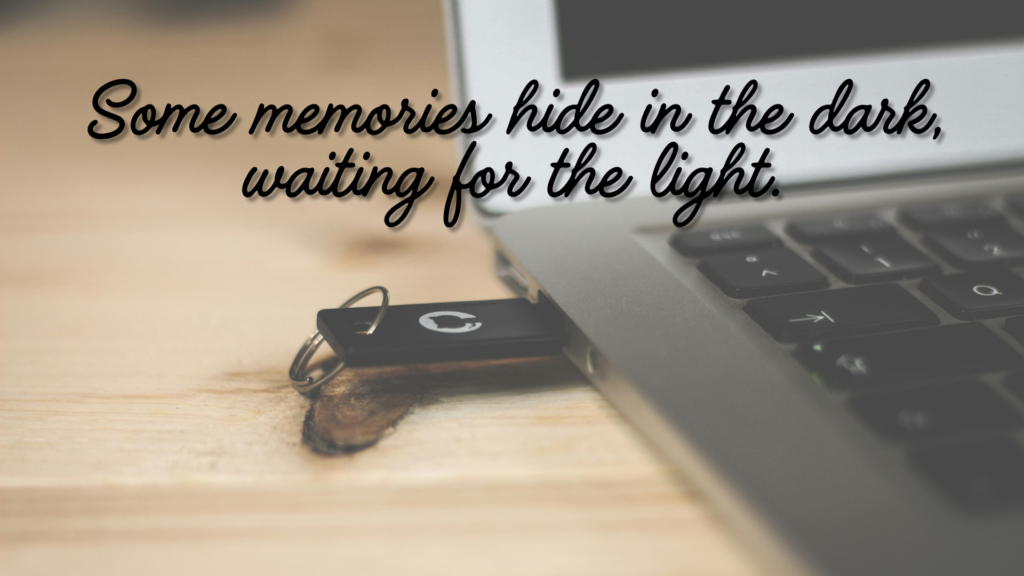
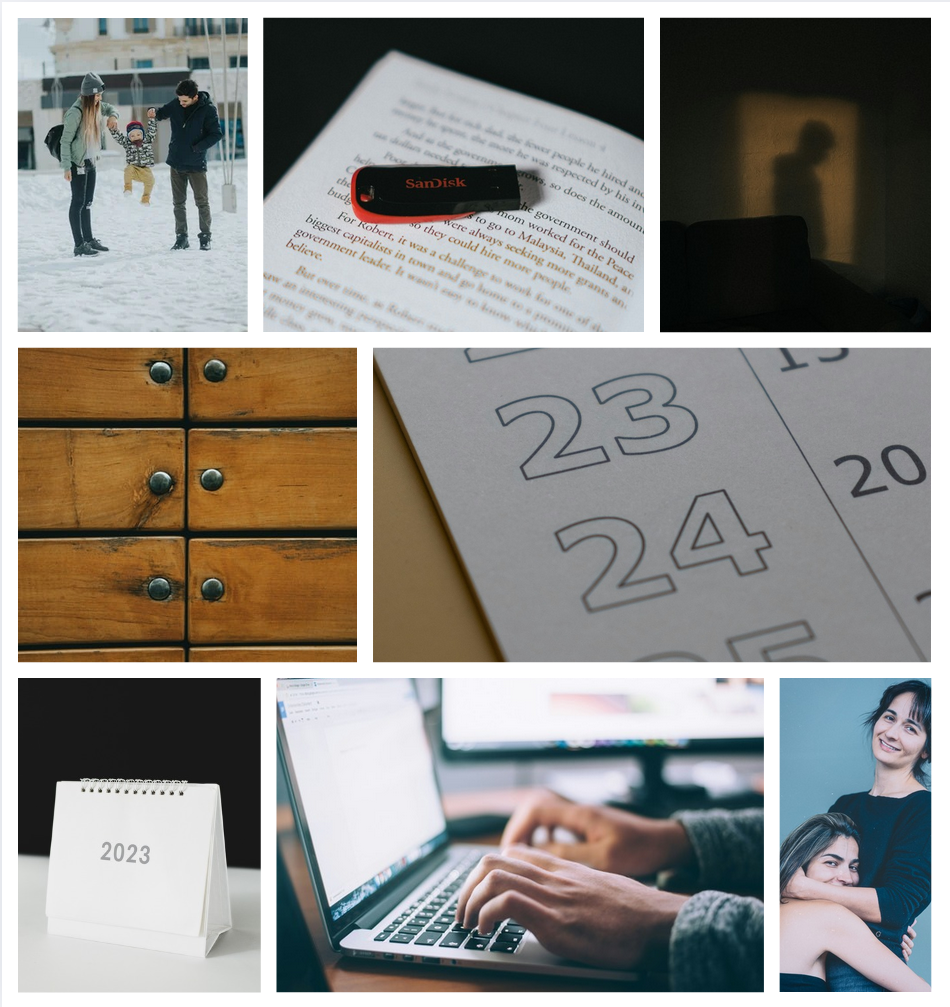
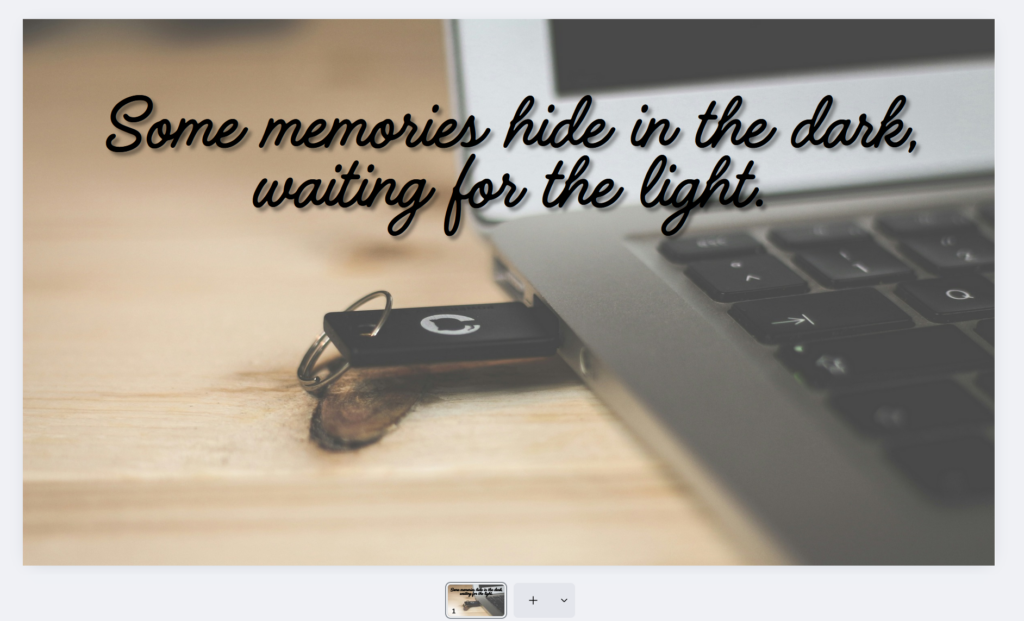
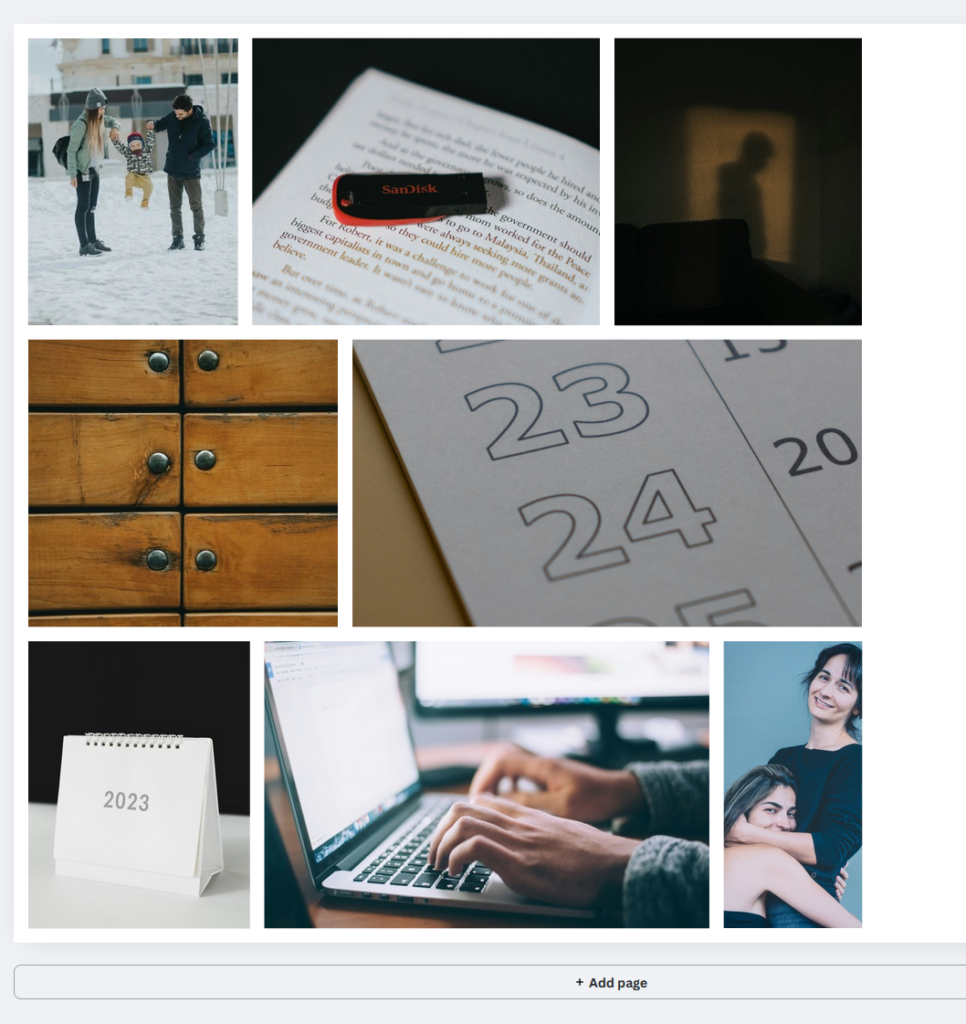
My design pieces visualized memory and time through typography and image arrangement. “Motivational Poster” began with a USB photo beside a laptop keyboard. In Canva, I added the quote “Some memories hide in the dark, waiting for the light” in script font with shadow effects, creating a visual metaphor for forgotten memories. “Storytelling Through Pictures” required gathering 8 images representing my narrative arc (family, USB, grief, drawers, calendars, reunion). I arranged them in a grid in Canva, creating a wordless visual timeline that flows left-to-right, top-to-bottom from happiness through loss to healing.
Motivational Poster (3 stars):
Storytelling Through Pictures (3 1/2 stars):
Audio
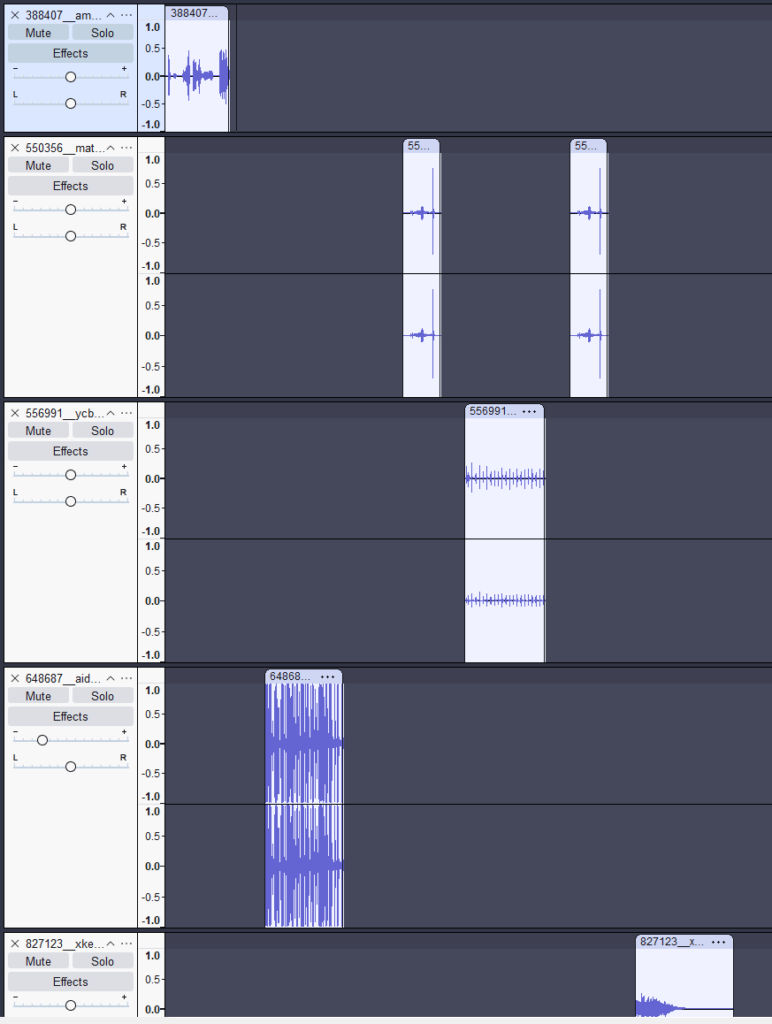
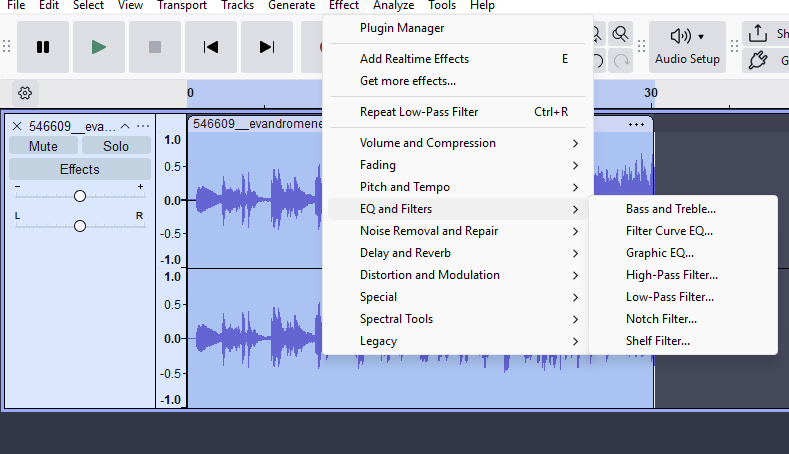
For audio, I told the story through sound alone. “Sound Effects Story” combined individual sounds from freesound.org. I found a baby’s laughter, drawer closing, clock ticking, silence, drawer opening, and a computer turning on. Using Audacity, I layered them with volume adjustments to create a 30-second piece that represents the 8-year journey. “Played From Another Room” transformed a song using Audacity effects: low-pass filter to reduce highs, some bass boost and treble reduction. The result sounds like music playing from inside a closed drawer.
Sound Effects Story (3 stars):
Played From Another Room (3 stars):
Video
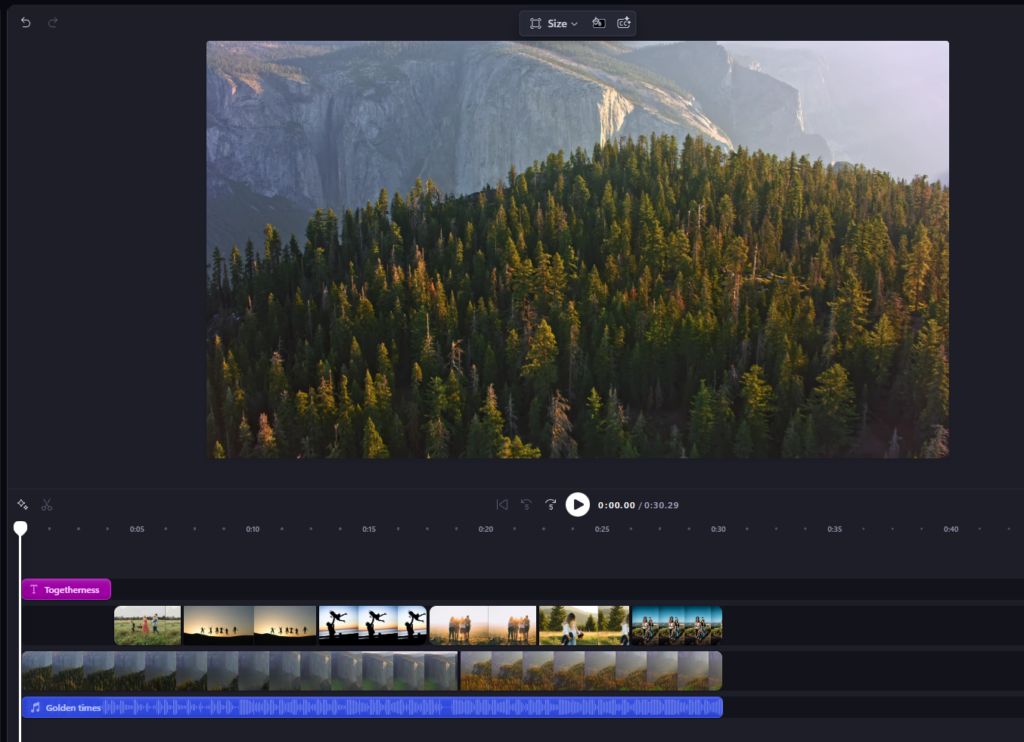
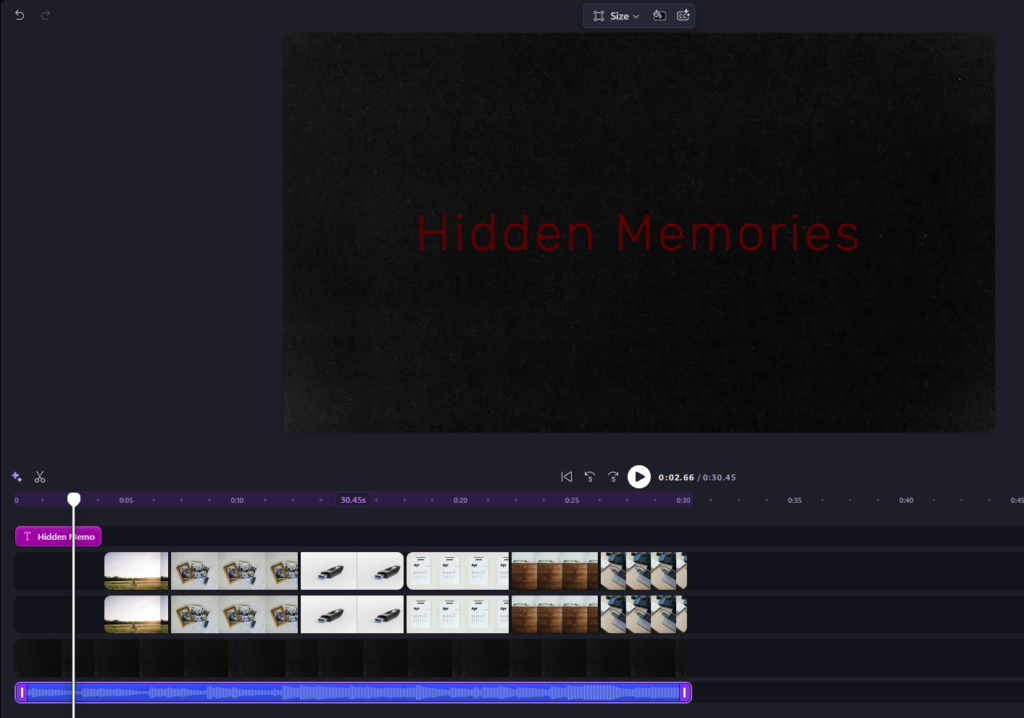
My videos brought static images to life with motion and music. “30 Second Memory” used Clipchamp to arrange 6 key images on a timeline with 5-8 seconds each, showing happy memories of the family. I applied fade transitions and emotional music to create a 30 second piece that feels like watching recovered memories. “Pictures Are Larger Than Words” arranged 7-8 narrative images as a slideshow with fade transitions and cinematic background music, telling the complete story in 30 seconds purely through visuals and sound.
This week in ds106, we dove into what is easily the most challenging and rewarding unit: video. This unit pushed us to become critical viewers of cinema before we even opened our editing software. We learned to “read” movies, analyzing techniques and storytelling, and then applied those lessons to our own complex video stories. This post is a summary of my work and reflections.
Part II & III: Reading Movies and Analysis
My analysis of cinematic techniques can be found in my previous posts:
This week, I completed the three required video assignments, each in its own post, telling its own story.
A Character’s Story: Vengeance in the Shadows This was the required assignment to tell a character’s story. (3 Stars) I chose to focus on The Batman and his singular drive for “Vengeance,” using the shadows and sounds of Gotham to define him.
Return to the Silent Era: Captain America’s Elevator Showdown For my first video assignment (4 stars), I took the iconic Captain America: The Winter Soldier elevator fight and re-imagined it as a silent film. By changing the audio and visual style, the entire meaning of the scene shifted from tense to comedic.
Spoil a Movie: The Circle of Life… and Death For my second video assignment (2 stars), I took on the “Spoil a Movie” challenge. I condensed the entire plot of The Lion King into 22 seconds, focusing on the juxtaposition of Simba’s birth and Mufasa’s death to spoil the story.
What did you learn? I learned that sound is more than 50% of the video experience. The “Return to the Silent Era” assignment proved this beyond a shadow of a doubt. You can take a scene of brutal violence, add a jaunty piano track, and it becomes slapstick comedy. Audio isn’t just background; it’s the entire emotional context.
What was harder than you thought it would be? Editing to a beat. For the Batman video, getting the clip to appear exactly on the word “Vengeance” took way more time than I expected. The same goes for the Lion King video—finding the exact frame where Scar says “king” and Mufasa starts to fall was a challenge.
What was easier? Finding clips, surprisingly. Once I knew what story I wanted to tell, it was easy to identify the exact 1-2 second clips I needed. The “Spoil a Movie” assignment felt daunting, but when I realized it just came down to two key moments (Simba up, Mufasa down), it came together very quickly.
What drove you crazy? Why? File formats and conversion! Just as the prompt warned, getting downloaded video files to properly import into my software was frustrating. Sometimes the audio would be missing, or the video would be choppy. It required a lot of patience and re-downloading to get clean-working files.
What did you enjoy? Why? I genuinely enjoyed the “Return to the Silent Era” assignment the most. It felt the most “ds106″–it’s a perfect example of taking existing media and creating new meaning through remixing. Seeing that tense, serious scene become genuinely funny just by changing the music!
The character at the center of this story is Simba, a naive and energetic lion cub destined to rule the Pride Lands. He is the beloved son of King Mufasa, and his story is one of joy, tragedy, and eventual redemption. We begin with his triumphant presentation to the kingdom, a symbol of life and hope. But his journey is defined by his evil uncle, Scar, who desires the throne for himself.
The primary location of our story is the Pride Lands in Africa, a vast and beautiful savanna ruled from the iconic Pride Rock. However, the story’s most pivotal moment happens in a dark, dusty, and dangerous gorge. This location is the complete opposite of Pride Rock—it is a place of shadows, stampedes, and death. It’s here that the entire plot shifts, turning a happy kingdom into a dark dictatorship.
For the “Spoil a Movie” assignment, I condensed this epic tale of life, death, and revenge into just 23 seconds, showing the beginning of the reign and the tragic end that sets the rest of the movie in motion.
What I learned from this assignment is the power of rapid-fire editing to tell a story. You don’t need all the dialogue. Sometimes, just showing the “Circle of Life” (Simba’s birth) followed immediately by the “Long live the king” (Mufasa’s death) is all you need to convey the entire emotional journey of a film. The juxtaposition of birth and murder, hope and despair, spoils the entire plot perfectly.
For the “Tell Your Character’s Story” assignment, I chose a character defined by the darkness: The Batman. This isn’t the billionaire playboy Bruce Wayne, but the raw, brutal persona he embodies. He is a nocturnal creature, driven not by heroism, but by a vow of “Vengeance.” He believes he is an instrument of fear, using the shadows as his primary weapon to strike at the heart of Gotham’s criminal element. As he says, he is the shadows.
This character’s location is his entire identity: Gotham City. It’s not just a place, but a sprawling, rain-slicked, neon-drenched character in its own right. It is a city perpetually shrouded in night, where crime festers in every alley and corruption rots the foundations. The only sounds are the constant drumming of rain, the distant wail of sirens, and the whispers of criminals wondering what lurks in the dark. It is a city that doesn’t need a hero; it needs a monster, and he is happy to oblige.
I created this short video to tell his story, using his own words to define his mission.
In conclusion, this assignment helped me learn to isolate a single, core theme of a character. By focusing only on “Vengeance” and his relationship with the shadows, I could tell a more potent and focused story in just a few seconds. It’s a clear reminder that a character’s story doesn’t have to be their whole story, but just the most important part.
The character at the heart of this video is Steve Rogers, better known as Captain America. A man displaced from time, his core is defined by an unwavering moral compass. This particular scene catches him at a moment of intense suspicion. He has just been labeled a fugitive by the very organization he serves, and as he steps into this elevator, he knows he is surrounded by men who are no longer allies, but obstacles. He is calm, observant, and profoundly dangerous, a perfect subject for a scene where tension speaks louder than words.
The setting is deceptively simple: a glass elevator within the Triskelion, S.H.I.E.L.D.’s technologically advanced headquarters in Washington, D.C. The clear walls offer a stunning view but also create a sense of exposure, turning the small, enclosed space into a transparent, claustrophobic cage. It’s the epitome of modern corporate architecture, all steel and glass. The irony of this assignment, “Return to the Silent Era,” is that the original scene’s tension is built on subtle sounds: the whir of the elevator, the tap of fingers on a phone, and the quiet, tense breathing. My goal was to strip this away and see if the visual tension alone could carry the story, even with a different musical tone.
Here is my video, edited to return this modern fight scene to the silent era.
This assignment was a fascinating study in juxtaposition. The original scene is a masterpiece of rising tension, built on hushed dialogue and brutal sound effects. By stripping it of its audio, converting it to black and white, and laying in a comically jaunty piano track, the entire emotional core of the scene is transformed. It’s no longer a desperate fight for survival; it’s a piece of slapstick comedy, a chaotic brawl straight from a Buster Keaton film. I learned just how critical audio is to our perception of media. What was once a tense, “cool” action beat now feels absurd and humorous.
This post serves as a final summary and reflection on the ds106 video unit. This assignment was broken into two main parts: a theoretical analysis of film language and a practical application of that analysis.
This unit challenged me to move beyond simple consumption of media and into active analysis. In reflecting on the process, I considered the following questions:
What did you learn? I learned how to identify and articulate the “grammar” of film. I now have a vocabulary (low-angle, juxtaposition, one-point perspective) to describe why a scene makes me feel a certain way. I learned that sound design and editing are arguably more powerful in telling a story than the images themselves.
What was more complicated than you thought it would be? The “Audio Only” analysis of the Matrix scene was surprisingly difficult. My brain kept trying to supply the visuals I already knew. It took active concentration to separate myself from that mental image and listen to what the audio track alone was communicating.
What was easier? Once I had read Ebert’s article, identifying his methods in the wild was easier than I anticipated. The use of high- and low-angle shots, in particular, became immediately obvious in every clip I watched.
What drove you crazy? Why? The hyper-fast editing of the Matrix scene was frustrating during the “Visuals Only” analysis. I had to re-watch the same 10-second segment multiple times just to note the sequence and type of shots used, as they changed every 1-2 seconds.
What did you enjoy? Why? I enjoyed the 3-step ‘Look, Listen, Analyze’ process the most. It was a completely new way for me to watch a scene. I was genuinely surprised by how different the ‘Audio Only’ experience was. It forced me to notice how the sound effects and musical score were telling their own story, and I gained a new appreciation for the scene’s sound design, which I had previously overlooked.
I also found the process of seeing other students’ analyses on the class blogs to be valuable, as it highlighted different interpretations and showed me techniques I may have missed in my own work. Overall, this was a challenging unit that provided a new lens for all future media I consume.
For the second part of this assignment, I applied the theories of film analysis to a specific scene using the “Look, Listen, Analyze” method. I chose the final “Big Fight Scene” between Neo and Agent Smith from The Matrix Revolutions, as it is visually and audio dense.
Watching the scene without sound, I took notes on the visual elements.
Pacing & Editing: The number of cuts is staggering. The scene’s pacing is erratic, rapidly alternating between extreme slow-motion (speed ramping) and hyper-fast cutting during the exchanges of punches.
Camera Angles: The camera almost never views the characters at eye level. It is dominated by extreme low-angle shots, looking up at Neo and Smith, or extreme high-angle, wide-angle shots showing them as tiny figures in a vast, destroyed city.
Lighting: The lighting is dark, monochromatic, and artificial. The entire scene is bathed in the familiar green tint of the Matrix, with the only significant light sources being flashes of lightning and the “code” effects from their impacts.
Movement: The movement is entirely superhuman. The wire-work allows characters to hang in the air, fly, and absorb impacts that would be fatal, visually reinforcing their god-like status.
Analysis 2: Audio Only (Screen Off)
Listening to the scene without visuals, I focused on the audio track.
Music: The music is the most dominant element. It is a massive, operatic, and swelling orchestral and choral score. The music, more than anything, communicates that this is not just a fight, but an epic, almost religious, confrontation.
Sound Effects: The sound effects are hyper-exaggerated and non-realistic. Punches are not “thwacks” but deep, percussive “booms.” Movement is a “whoosh,” and every lightning strike is a sharp “crack” that punctuates the action.
Dialogue: Dialogue is minimal. The few lines spoken (“This is my world!”) are declarative and thematic, not conversational.
Ambience: The sound of driving rain is a constant, steady layer that provides a chaotic backdrop for the music and effects.
Analysis 3: Synthesis (Full Viewing)
Watching the scene with both picture and sound, I saw how the elements synthesize.
The visual cuts are perfectly timed to the audio. Every fast cut lands on a musical beat or a sound-effect “boom,” creating a jarring, percussive rhythm.
The moments of visual slow-motion are always paired with a major crescendo in the orchestral music and choir, signaling to the audience that this is a moment of high significance.
The dark, rainy visuals are reinforced by the constant sound of rain and thunder, creating a unified, oppressive, and chaotic atmosphere.
Reflection
Minimizing one of my senses was incredibly revealing. Watching without sound, the fight almost looked repetitive and rhythm-less. Listening without video, I realized the emotional story is told almost entirely by the musical score. The scene’s “epic” quality comes from the audio, not the visuals.
For most of my life, I have been a passive watcher of movies. This assignment, however, challenged me to “read” film; to deconstruct its visual and auditory language to understand how it creates meaning. To begin this process, I read Roger Ebert’s “How to Read a Movie” and analyzed three short videos on specific cinematic techniques. This post will detail my response to Ebert’s methods and summarize my key takeaways from the videos.
Roger Ebert’s Methods
Ebert’s article provides a powerful toolkit for understanding the subconscious language of film. His methods are effective because they tap into deeply ingrained cultural and psychological associations.
On Camera Angles: Ebert’s assertion that low-angle shots make a subject look powerful and high-angle shots make them look weak is, in my view, the most effective and universal technique. It works because it forces the viewer to physically and metaphorically “look up” or “look down” at a character, mimicking the body language of submission or dominance.
On Movement and Placement: His idea that left-to-right movement feels “correct” and right-to-left movement feels “wrong” or arduous is a fascinating concept. This likely works for Western audiences conditioned to read text from left to right. This makes left-to-right movement feel like progress, while the opposite feels like a struggle against the grain.
Summary of Cinematic Techniques
To further my understanding, I watched three videos on specific directorial techniques.
Hitchcock Loves Bikinis: This clip was a revelation. It perfectly illustrates the “Kuleshov effect,” which Hitchcock calls “pure cinematics.” He demonstrates that by juxtaposing the exact same shot of a man’s smiling face with two different images (a woman with a baby vs. a girl in a bikini), the audience entirely changes its interpretation of the man. The key takeaway is that editing, not just acting, creates the performance and meaning.
Kubrick // One-Point Perspective: This video is a compilation of Stanley Kubrick’s relentless use of one-point perspective, which creates perfectly symmetrical images that seem to recede into a central vanishing point. I learned that this technique is incredibly versatile: it can create a feeling of intense focus, formal order, or a deep-seated psychological unease and obsession, as the viewer is relentlessly pulled into the center of the frame.
Tarantino // From Below: This video showcases Quentin Tarantino’s signature “trunk shot” and other extremely low-angle shots. The key takeaway is how this specific angle functions as a storytelling device. It places the audience in a subordinate or voyeuristic position, making the characters who tower over the camera seem exceptionally powerful, dominant, and in control of the situation.
Together, Ebert’s article and these videos provide a foundational understanding of how directors use a non-verbal language of angles, edits, and composition to tell a story.