Introduction
I have always loved photography. From aerial to quick iPhone snaps, photography is a means of memorializing subjects that mean a great deal to you, and thus sharing it with others. However, the quality of those images you take matter. A blurry or photo taken with no care with not captivate an audience quite like a photo taken with great patience and timing. There are various ways one can help take this skill to the next level. I’ll first describe some important tips. Then, Ill describe what I personally feel are important to consider, along with how they connect with what duChemin says. Lastly, I’ll share some of my own personal experiences.
Key Concepts from “20 Ways to Make Better Photographs”
Get Pickier: When taking good pictures, It’s important to remember to compose images in your mind. By doing so, you allow yourself to better predict not only what would make a great photo, but also allow you to take the perfect photo at the perfect time.
Change Your Perspective: Changing your perspective can help to better engage your audience. Different angles of a subject help to really put the audience in your shoes.
Balance: duChemin tells about how the rule of thirds is not just placement on a grid, but rather visual mass. You need to take into account elements that draw more meaning into your photo.
Anticipate the Moment: When taking photos, an important thing to keep in mind is what are you taking a photo of? Are you taking a picture of something that’s happening now, or something that’s going to happen, such as the takeoff of a bird? In order to take pictures that engage an audience, It’s important to anticipate future action from your subject; will you be ready to take that perfect picture?
Becoming a Better Photographer
The DS106 “Visual Storytelling” material is blunt and actionable: be selective, use contrast, change your viewpoint, build depth, balance the frame, anticipate moments, respect light, and make exposure choices that serve the image. It’s less about rules and more about intentional shooting, which is exactly what I enjoy doing. As a conservation biologist major, I try to take images of animals that I find neat. As a result, intentional shooting is very hard, as animals are hardly predictable. I feel like this is also where duChemin’s point of “anticipation” really comes into play.
What is Visual Literacy?
Visual literacy is the ability to read and write with images. It’s the ability to make and interpret visual messages, not just look at pictures. Enhancing my own visual literacy abilities can help improve my own storytelling abilities, as I’ll know what to include and what not to include. By being able to effectively look at my own work and know what belongs and what doesn’t, I’ll be able to produce far better pieces.
The Story Behind Migrant Mother
The backstory of Dorothea Lange’s Migrant Mother explains why the image still hits; it’s composition, timing, and context combine into a symbol of Depression-era hardship. Lange almost didn’t stop; when she did, she made a handful of frames that used posture, gaze, and the children’s turned faces to concentrate emotion. Knowing that history changes how I think about captions and series: context multiplies impact. This is why I find that adding a caption to my images adds so much depth; it allows my audience to understand why I selected that image to be shared.
Personal Practice
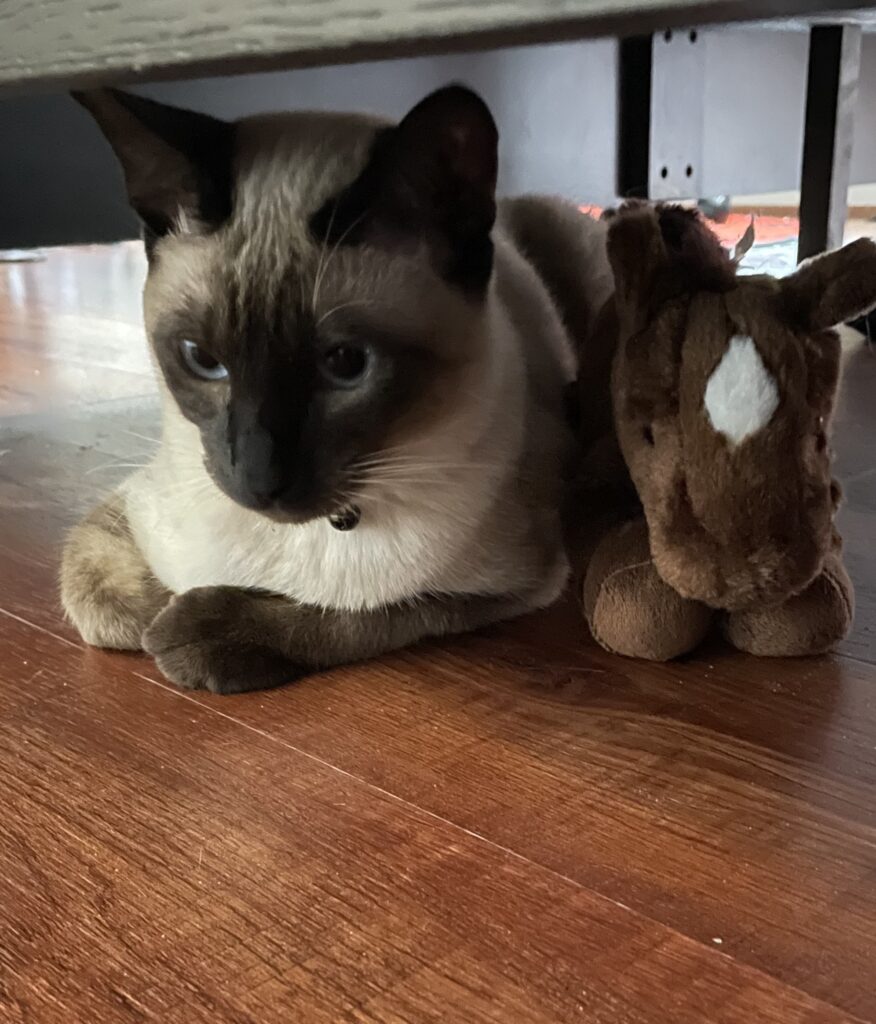
Through this week’s lessons, there are many ways I can improve my own photography skills. For once, anticipating the moment is highly important, especially someone in my field. Here’s a photo in which I had taken this skill into account, its a little silly as it involves my cat, but it’s a picture in which I had to anticipate him sitting down:
Another example I have is one in which I kept the angle of the photo in mind. The perspective really mattered when capturing this spider, as a frontal view would not have truly captured all the detail that I wanted to convey. By doing a top down angle, I can show my viewers the true size of the spider:

Conclusion and Call to Action
So to conclude, there are many factors that go into creating the perfect photo. Whether it be planned or not, its important to really think about everything you want to convey within your photo. What stories you are trying to tell. So to end off on a question, whats one thing you find that you’ve always taken into account when taking your photos, and whats one thing you never really consirdered doing?
Leave a Reply