Tag: VisualAssignments504

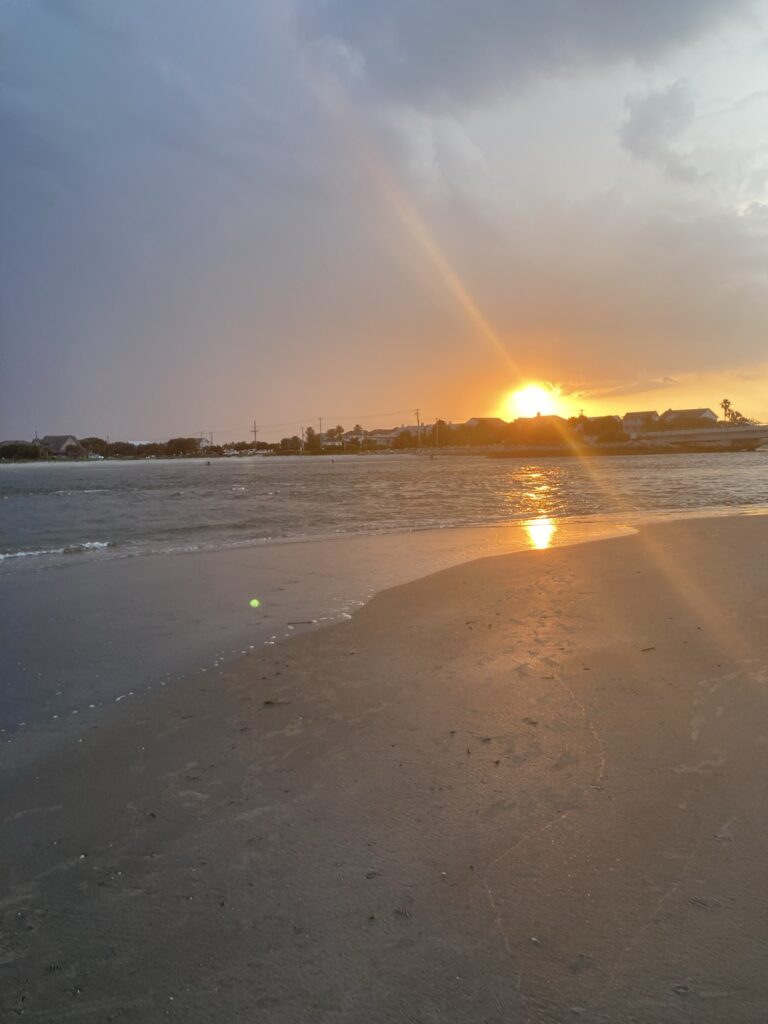
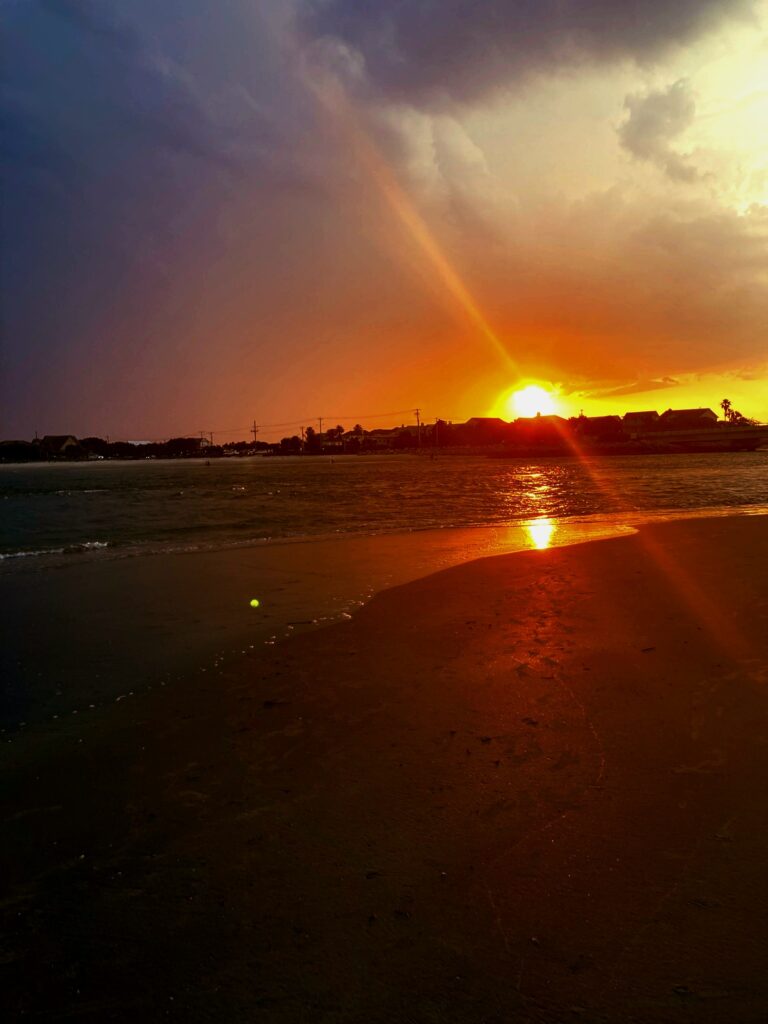
  • Same Shore, Two Feelings

    Same beach, same evening, two completely different stories. The first frame is the coast as it was; cool, airy, almost casual. The second is the coast as it felt five minutes later—heavy and cinematic. I didn’t move, nor change the time; only the sliders moved, and that was enough to change the mood.

    What changes isn’t the shoreline; it’s the temperature of the light and the way the scene carries weight. In the first image, the sky leans blue and the sand reads neutral; good weather, typical for a beach day. In the second, warmth takes over. The sun streak turns amber, the wet sand glows, and the shadows deepen into near-black. By shifting color and contrast I pushed the scene from easy afternoon to a colorful dusk, and that one choice flips the narrative: from “nice walk” to “last light before a storm.”

    The exercise proved how color temperature and contrast dictate mood faster than a new subject ever could. The original says “nice evening.” The graded version says something about maybe “a new time” or “a new day.” Something interesting I may try next time is trying a cooler, de-saturated grade for a melancholy take, and a high-key grade for nostalgia, just to see how far the same frame can stretch!

    Colour is a power which directly influences the soul. -Wassily Kandinsky

    https://www.goodreads.com/author/quotes/155176.Wassily_Kandinsky

    The bottom line is that grading is story. The “before” records what the beach looked like; the “after” records how it felt to stand there with the wind picking up and the sun diving. Choosing between those versions is how I choose the emotion I want the viewer to carry away after seeing these images.

  • Summit at the Toy Pile

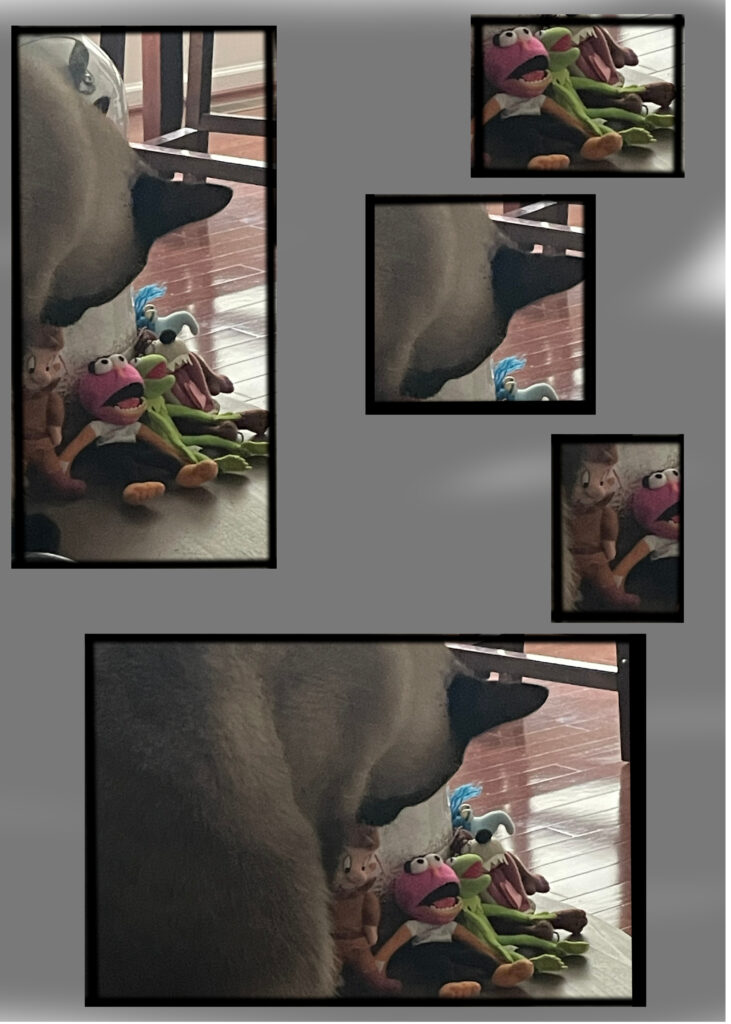
    It started as a normal patrol. Ollie rounded the table leg and paused at the foot of the toy pile; the Muppet council under high alert and suspicious. One photo later, I carved the moment into panels to show the five seconds of silent negotiation between them and him.

    Here’s a cowboy-standoff song you can play in the background to really set the scene of the story!

    Panel 1 sets the scene: Ollie enters from the left, body tall, investigating the council. Panel 2 cuts to the toys; their open mouths seemingly talking amongst themselves about the growing danger. They’re feared a coup is underway. Panel 3 and 4 are zoom in; a standoff between the two parties. Who gives way first? And lastly the 5th panel showcases the result; the Muppets hold their ground. The table is theirs for another day.

    The joke is small, but that’s why it works. Cropping one image into beats let me pace the moment like a comic: establish, reaction, tension, then the resolution. No speech bubbles were even needed to tell the story; just pictures! And to boot, one could interpret this comic in many different ways.

    While creating this comic, what really surprised me was how much story lives inside one still frame once you choose. The first tall shot does the heavy lifting, but the ear crop and the toy close-up sell the tension. Next time I’ll test a hero panel across the top with three smaller beats below, and I may add a single caption bar to time the punchline better!

  • Visual Week Summary; Learning and Improving

    This unit pushed me to think beyond “nice pictures.” Between the readings, videos, and Assignment Bank work, I had to plan for story first and then use visuals, sound, and structure to make that story land. Below I’ve gathered my takeaways, the rough spots, and links to the work I produced.

    Key Learnings

    • Intent beats impulse. Strong images came from deciding what the frame is about and removing everything that isn’t part of that idea.
    • Audience + purpose guide choices. From the DS videos, the seven elements (POV, Dramatic Question, Emotional Content, Voice, Soundtrack, Economy, Pacing) gave me a checklist I can actually use before I shoot or edit.
    • Constraints sharpen composition. The “4 lines, 5 dots, 1 curve” limit forced me to anchor the scene with a diagonal, balance the stars, and use one curve to seal the mood.
    • Context multiplies impact. Learning the story behind Migrant Mother changed how I caption and sequence my own photos; backstory matters.

    Challenges Encountered

    Tool quirks. Getting embeds to cooperate (Flickr/SoundCloud) and keeping panel gutters identical in GIMP were fiddly. Guides, Stroke Selection, and “Insert from URL” solved most of it.

    Process discipline. I tend to “fix it in post.” Storyboarding even a tiny sequence (my comic panel layout) took more time up front but saved me time later.

    What I Got Out of This Unit:

    Once I started treating images like sentences (with a subject, verb, and object) the editing process got simpler. Choosing light first, limiting myself to fewer frames, and doing a fast edge/corner scan before clicking made more difference than any filter. I also caught myself narrating tiny moments (like Ollie half-listening to the Hollow Knight track) and realized those are the stories I actually want to tell.

    Visual Storytelling Reflections:

    My Reflection to the Materials Viewed
    My Photo Safari

    Visual Assignments

    Draw it – Ollie, Knight of the Pillow (2 Stars)
    4 Lines, 5 Dots, 1 Curve – Five Stars Over the Hill (3.5 Stars)
    Switch Up the Mood – Same Shore, Two Feelings(2 Stars)
    One Shot – Summit at the Toy Pile (3 Stars)

    Conclusion

    To conclude, this unit really rewired how I work: story first, then visuals that make sense. I’m leaving with a work-flow: choose light first, cap myself at fewer, deliberate frames, clean the edges, and give every post context so the image says more than it shows. Constraints (like 4/5/1) and pacing (from the One Shot) proved that small choices shape big meaning. Going forward—especially in my conservation work—I’ll storyboard before I shoot, write a one-sentence “so-what” for each piece, and use grading, captions, and links to aim the viewer’s emotion on purpose. I’m excited to carry these habits into the next assignments and keep telling small or big stories that stick!

    Q&A

    Q: What did you learn this unit?
    A: Story first, then visuals that earn their place. Choosing light first, capping myself to fewer, deliberate frames, cleaning edges, and adding context (captions/links) made my images read faster and clearer than any filter.

    Q: What was harder than you thought it would be? Why?
    A: Pacing and sticking to a plan. Writing the story before editing and storyboarding the One Shot took more discipline than I expected, but it prevented aimless edits and gave me cleaner posts.

    Q: What was easier than you expected? Why?
    A: Once I had a repeatable template (hook, story, explore, process, reflection) posts came together quickly. GIMP borders were simple with Alpha to Selection, then Stroke Selection, and Guides/Snap made panel spacing painless. The block Navigation and Social Icons were also straightforward.

    Q: What drove you crazy? Why?
    A: Two things: (1) random embed failures (Flickr/SoundCloud). The fix was Insert from URL or Custom HTML, but it wasted time. (2) Tiny alignment inconsistencies—uneven gutters/headings. Guides and consistent stroke widths finally solved it.

    Q: What did you really enjoy? Why?
    A: Turning small moments into stories. Draw-It (Ollie) paired perfectly with the calm Hollow Knight track; One Shot felt like cutting a mini film from one frame; 4 lines/5 dots/1 curve sharpened composition by constraint; Switch Up the Mood proved how color grading lets me steer emotion on purpose.
  • Five Stars Over the Hill

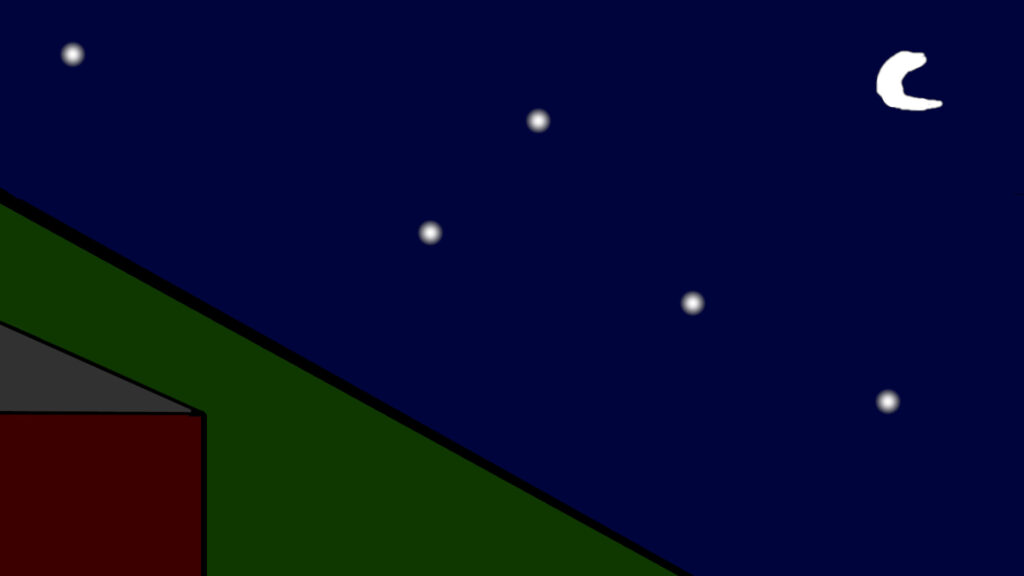
    I wanted to see how little it takes to suggest a whole scene. With just a few marks, the house, the hill, and the night all clicked into place. It was as if my brain filled in the rest as I finished the drawing. I sketched the hill’s diagonal first, then dropped in the roofline, stars, and crescent until the frame felt balanced.

    Its a simple moment; a house tucked into a steep slope, a dark sky, and five soft stars in the distance. All of which is highlighted by the crescent moon. Now, there isn’t much detail on purpose; the emptiness is the point of this image.There are only three different shapes used here; 4 lines (That make up the house and the hill), 5 dots (The stars), and a single curve that represents the moon.

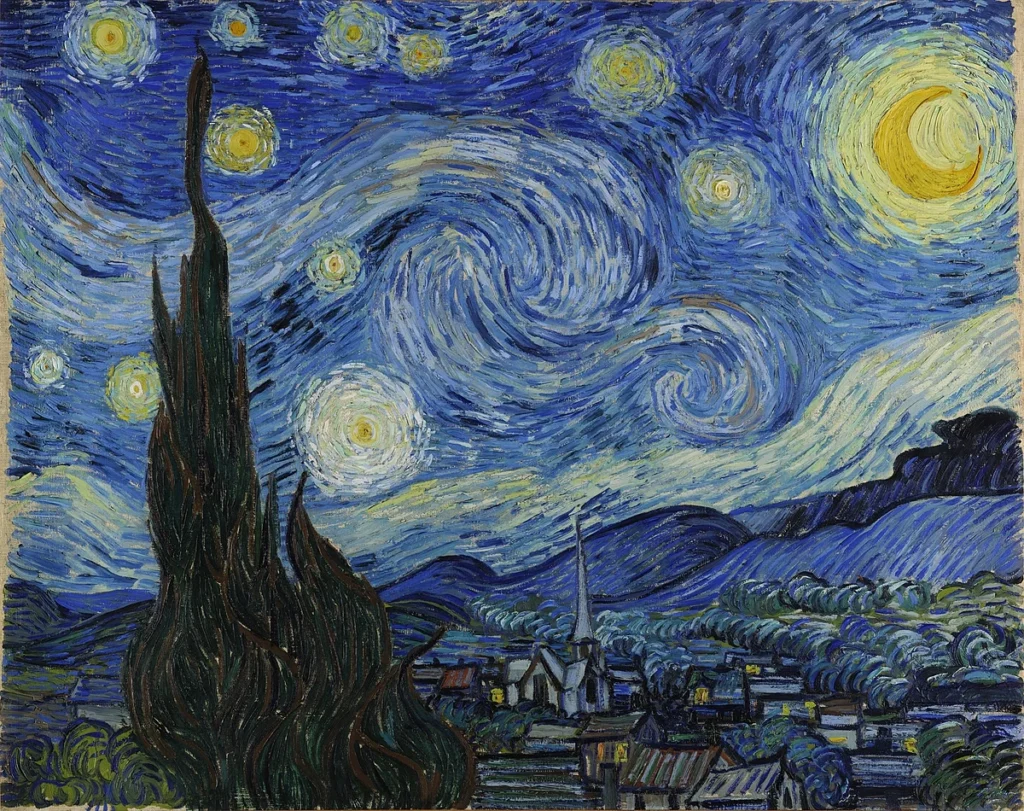
    The minimal night sky always makes me think of how a few shapes can carry a whole mood. If you want to see a maximal version of the same idea (sky as emotion)Maybe take a look at The Starry Night by the famous Vincent van Gogh. Notice how much the composition leans on simple curves and dots even there!
    https://en.wikipedia.org/wiki/The_Starry_Night

    Working inside the “4 lines, 5 dots, 1 curve” rule forced better choices. The long hill line became my anchor, the house lines gave the scene a place to rest, the five stars kept the eye moving, and the single curve sealed the mood without extra clutter. Next time I might shuffle the star positions into a looser constellation or thin the moon’s stroke, but I like how this version proves the point: a few intentional marks are enough to tell a whole story.

  • Ollie; Pillow Knight

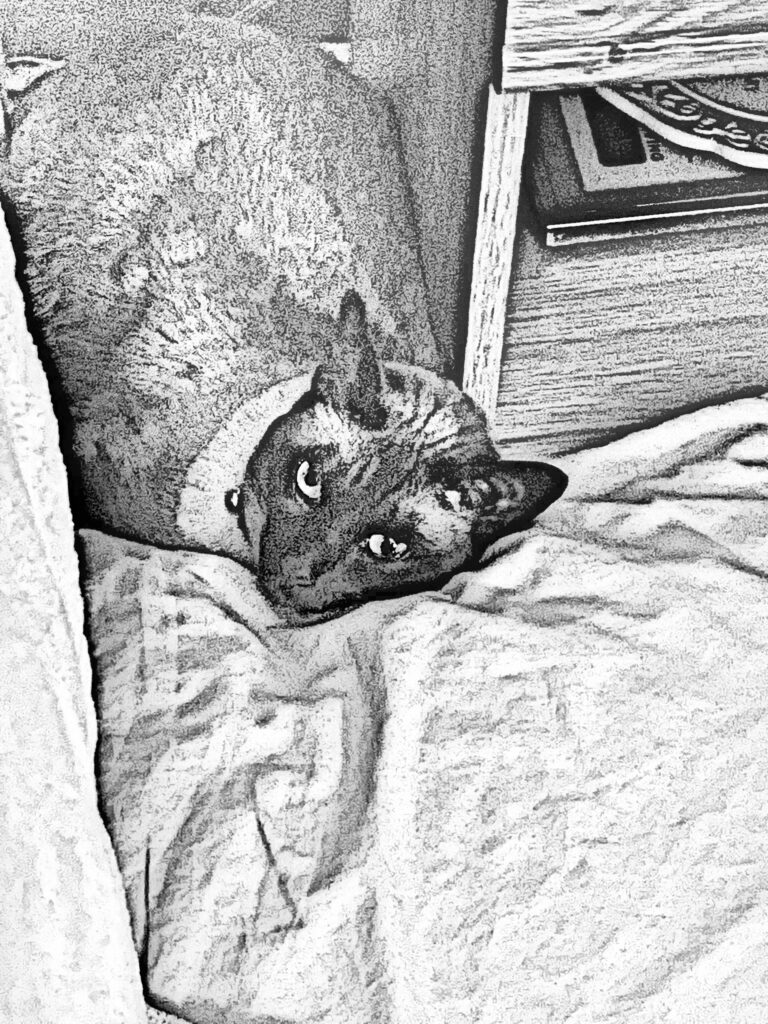
    I was in the middle of playing a game called Hollow Knight, stuck in one of those quiet sections where the soundtrack shifts to a soft, almost classical theme. Ollie had curled himself into the pillow by my grandparents’ nightstand, ears tipped toward the TV like he was pretending not to listen. I was in a specific section of the game; one that played a soft, classical sounding soundtrack. Ollie really seemed to enjoy it as he seemingly struggled to stay awake as he listened.

    I don’t blame him either; this track specifically was incredibly peaceful and serene. If I wasn’t the one playing the game, I may have fallen asleep as well. In fact, here’s the exact soundtrack that played; you can listen to it as well to see just what I mean! After playing, you too may understand just how peaceful it was.

    I find it rare to find a moment in which Ollie pays attention to my gaming sessions, so I promptly took a picture of him. I grabbed my phone, framed the pillow and the edge of the nightstand so the scene felt quiet on purpose, and snapped the shot right before he finally let the sleep win. I then headed over to GIMP in order to further edit the scene. I felt as if making the image appear to be more of a drawing would fit more.

    In order to actually nudge the photo into a sketch, I ran a quick filter in GIMP. I used the Desaturate tool first, then utilized the Cartoon filter to ink the edges more. I tightened contrast with the Levels tool so the textures felt like pen on paper. The black-and-white, comic-leaning look matches the calm of the scene and keeps the focus on Ollie listening. Although it’s a small moment, I felt it’s exactly the kind that makes the drawing version feel right.