I wanted to see how little it takes to suggest a whole scene. With just a few marks, the house, the hill, and the night all clicked into place. It was as if my brain filled in the rest as I finished the drawing. I sketched the hill’s diagonal first, then dropped in the roofline, stars, and crescent until the frame felt balanced.
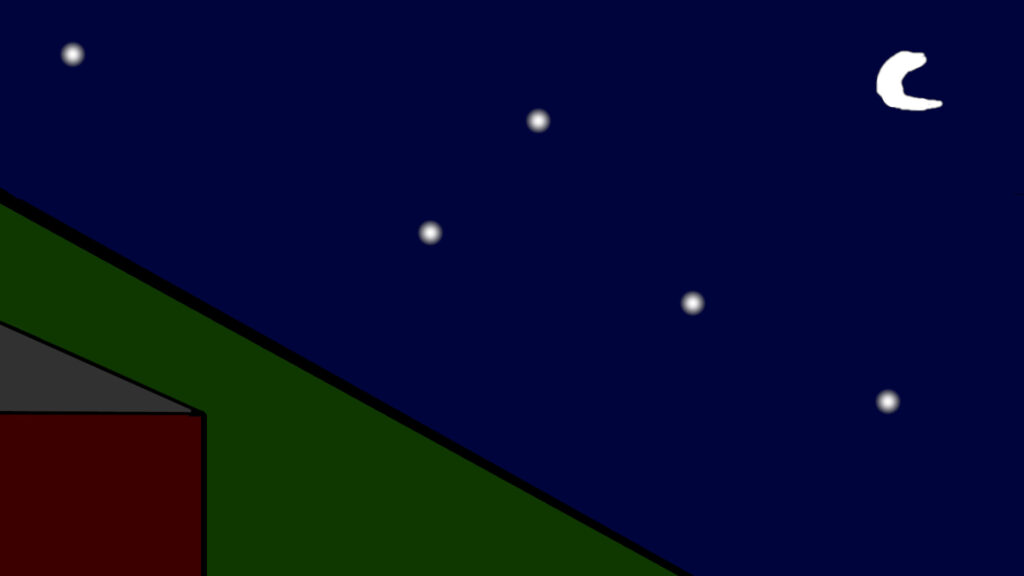
Its a simple moment; a house tucked into a steep slope, a dark sky, and five soft stars in the distance. All of which is highlighted by the crescent moon. Now, there isn’t much detail on purpose; the emptiness is the point of this image.There are only three different shapes used here; 4 lines (That make up the house and the hill), 5 dots (The stars), and a single curve that represents the moon.
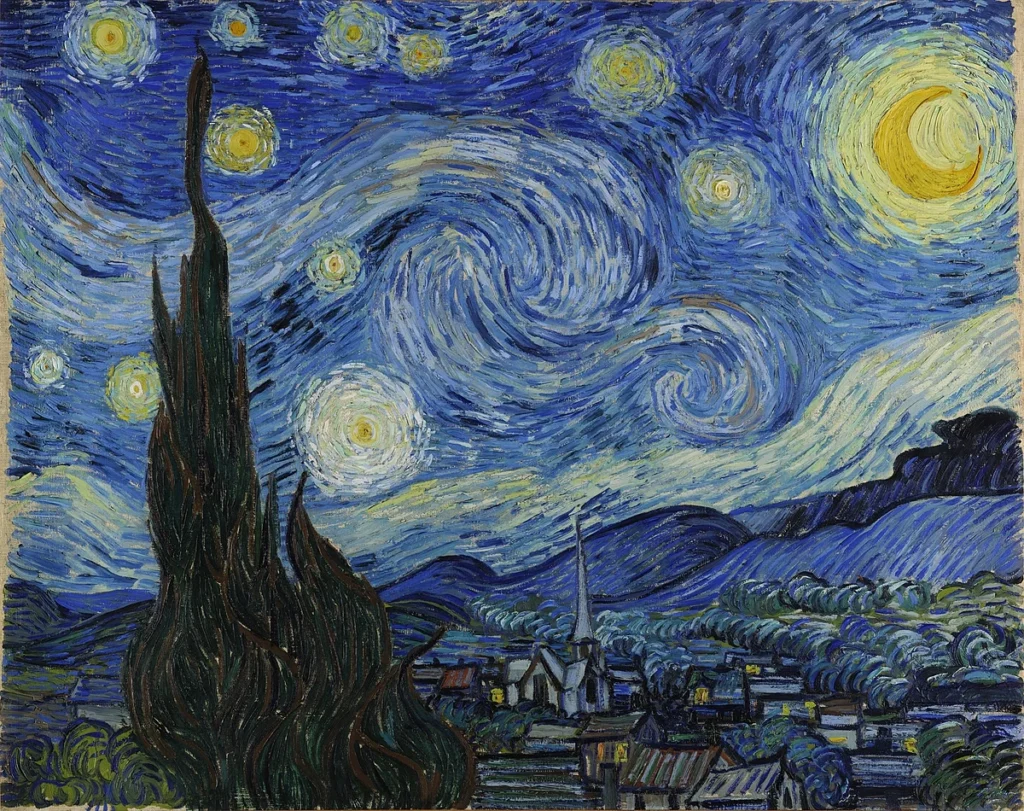
The minimal night sky always makes me think of how a few shapes can carry a whole mood. If you want to see a maximal version of the same idea (sky as emotion)Maybe take a look at The Starry Night by the famous Vincent van Gogh. Notice how much the composition leans on simple curves and dots even there!
https://en.wikipedia.org/wiki/The_Starry_Night
Working inside the “4 lines, 5 dots, 1 curve” rule forced better choices. The long hill line became my anchor, the house lines gave the scene a place to rest, the five stars kept the eye moving, and the single curve sealed the mood without extra clutter. Next time I might shuffle the star positions into a looser constellation or thin the moon’s stroke, but I like how this version proves the point: a few intentional marks are enough to tell a whole story.
Leave a Reply